Beyond Digital Batch Records: Managing FDA and EU GMP Documentation While Preserving Data Integrity
Learn how digital/electronic DHF, DMR, DHR, and EU MDR Technical Documentation improves data integrity, reduces human error, and simplifies global regulatory compliance.
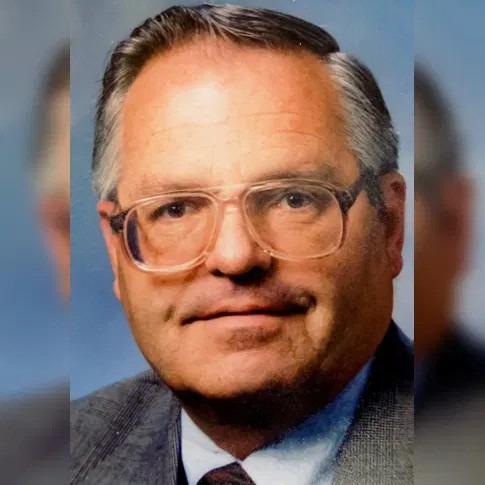
Instructor
John E. Lincoln
FDA Regulatory Affairs, Design Control & QMS Expert

What You'll Learn
About the event
About this event
How the use of digital/electronic versions of US FDA's and EU's DHF, DMR, DHR, and the EU's MDR Technical Documents Files / equivalents can reduce the possibility of delays in implementation/changes and chances of human error in use, while maintaining data integrity.
A popular seminar, updated with the latest FDA and EU requirements and newer digital/electronic tools. As U.S. companies go global, they must meet different product design documentation. The cGMP's mandate Design Control and the Design History File (DHF). ISO 13485 mandates the same, a Design and Development File, per 7.3, which is now to be part of the EU's MDR-required documentation. In order to sell globally, the EU's CE-marking documentation is a requirement — the Technical Documentation File. Currently they serve different purposes, support different goals, but their roles do overlap. And how/where do the DMF and Batch Records fit?
Newer incorporation of digital formats in lieu of the old paper/legacy systems has the promise of increasing documentation accuracy and data integrity, through implementation, updates/revision, changes, and even decommissioning. Regulatory accuracy, compliance and consistency is better assured as well.
WHY YOU SHOULD ATTEND
This seminar will examine the existing requirements for the US FDA's DHF, and the derivative documents, the DMR/F and DHR/batch records, the pros (and some cases cons) of digital/electronic alternatives, and the identical ISO 13485 7.3 D&DF. It will consider the EU's revised MDR and its Technical Documentation File requirements, and evaluate the documents' differing purposes/goals.
Required and desirable contents will be discussed. Also considered: areas requiring frequent re-evaluation/update; similarities and differences; future trends; typical DHF Table of Contents; Technical Document File Table of Contents; the importance and usefulness of the old "Essential Requirements," now "General Safety and Performance Requirements," and a suggested matrix format; structure of the "Declaration of Conformity"; self-declaring or NB reviewed.
Additional benefits from digital records include: simplifying version control; streamlining template review and approval; improving data accuracy; increasing accessibility; and the easy ability to scale. Finally, the differing approaches to file inspections/audits by the FDA and Notified Bodies will be discussed.
Code: MD3752
Curriculum
Requirements
- Working in medical device, combination product, or FDA/EU-regulated manufacturing environments
- Applicable to quality, regulatory affairs, R&D, engineering, production, and operations professionals
- Relevant to those managing product documentation, design controls, or batch record systems
Who Should Attend
This seminar is designed for professionals responsible for medical device documentation, design controls, and regulatory compliance. Essential for: Quality Assurance Departments, Regulatory Affairs Departments, Research and Development Departments, Engineering Departments, Production Departments, Operations Departments, and Senior Management in Devices and Combination Products.
Areas Covered
Meet Your Instructor
John E. Lincoln
FDA Regulatory Affairs, Design Control & QMS Expert
John E. Lincoln has over 40 years experience in U.S. FDA-regulated industries, 30 of which are as an independent consultant. John has worked with companies from start-up to Fortune 100, in the U.S., Mexico, Canada, France, Germany, Sweden, China and Taiwan. He specializes in quality assurance, regulatory affairs, QMS problem remediation and FDA responses, new/changed product 510(k)s, process/product/equipment including QMS and software validations, ISO 14971 product risk management files/reports, Design Control/Design History Files, and Technical Files. He has held positions in Manufacturing Engineering, QA, QAE, Regulatory Affairs, to the level of Director and VP (R&D). John has prior experience in military, government, electronics, and aerospace industries. He is a peer-reviewed author, teacher, and speaker, and a graduate of UCLA.
Event Details
Format
Recorded Webinar
Duration
1.5 hours
Certificate
Included
Access
Lifetime
Related Events

Digital Quality Metrics and AI/ML Analytics: Building a Continuous-Improvement Framework that Aligns with Regulatory Expectations
Learn how AI/ML and real-time digital quality metrics build a continuous-improvement framework aligned with FDA regulatory expectations, 21 CFR Part 11, and GAMP®5.
 Carolyn Troiano
AI in GMP: What the FDA Is Already Expecting - Before You Ask
FDA already expects GMP compliance for AI systems. Learn how existing validation, data integrity, and oversight rules apply—before regulators come calling.
 Dr. Ginette Collazo
HPLC Analytical Method Development and Validation
Master HPLC instrument and method validation to meet US EPA and FDA requirements for pharmaceutical analysis.
 Dr. John C. Fetzer